Why Trailer Bearing Maintenance Matters: The Small Task That Prevents Big Problems
When it comes to trailer safety, it’s easy to focus on the obvious—brakes, tires, lights, and load securement. But one of the most critical components on your trailer is also one of the most overlooked: the wheel bearings.
They’re small. They’re hidden. And when they fail, they can bring your entire trip to a stop.
The Role of Wheel Bearings
Wheel bearings sit inside the hub and allow your trailer wheels to spin freely on the axle. Their job is simple but essential. They reduce friction, carry the weight of the trailer, and keep everything moving smoothly mile after mile.
Every time you tow—whether it’s a quick trip across town or a long haul down the highway—your bearings are working constantly. They handle load, heat, and road vibration all at once. And unlike other components, bearings typically won’t show signs of a problem until it has already progressed.
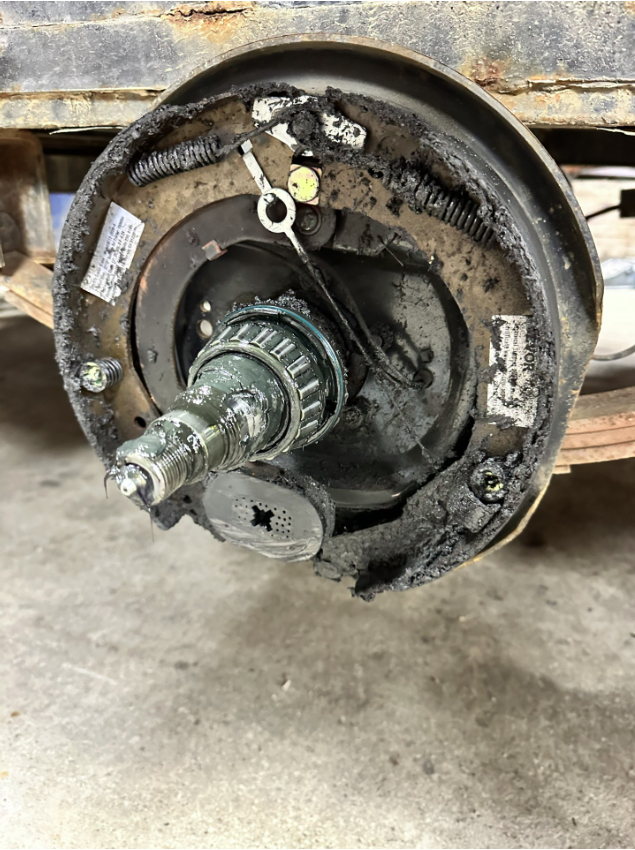
Bearing failure rarely impacts just one component. This damaged wheel assembly illustrates how wear or failure inside the hub can lead to more extensive repairs if not identified early.
What Happens When Bearings Are Neglected
Bearing failure rarely happens suddenly. Instead, it develops over time as grease begins to break down or becomes contaminated. Moisture, dirt, and debris can find their way into the hub, reducing lubrication and increasing friction. As friction builds, so does heat.
That heat can lead to damaged bearings and races, failed seals, and even brake contamination if grease leaks into the braking system. In more severe cases, the wheel can lock up or separate entirely from the trailer. What could have been a simple maintenance task can quickly escalate into a costly and potentially dangerous roadside situation.
The Hidden Risk Factor
One of the biggest challenges with wheel bearings is that they are out of sight. Unlike a flat tire or a broken light, a failing bearing gives no immediate visual cue that something is wrong.
Many trailer owners only become aware of a problem when they hear unusual noise, feel vibration, or notice excessive heat coming from the hub. By that point, damage has often already occurred. This is why relying on symptoms alone is not enough—preventative maintenance is key.
More Than Just a Maintenance Task
Proper bearing maintenance is not just about keeping your trailer in good working condition. It is directly tied to safety.
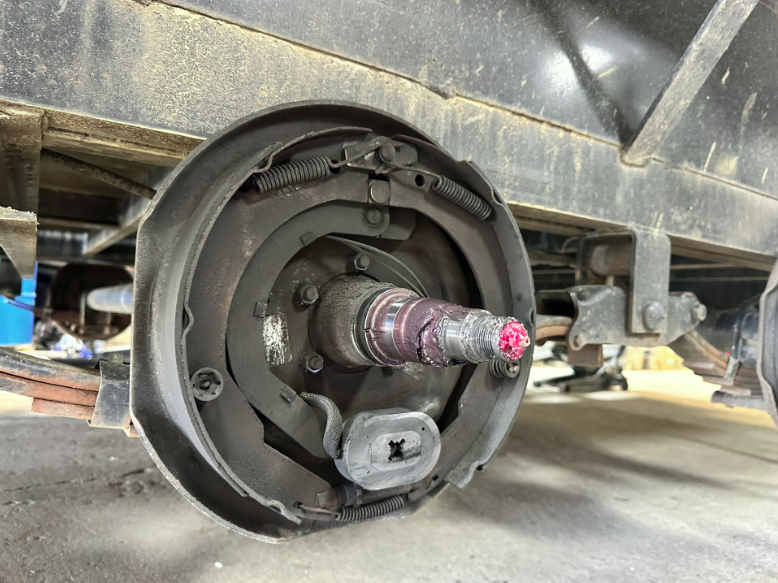
Removing the hub for bearing service also provides access to inspect the brake assembly (backing plate), including the magnet surface, brake shoes, and adjusters. This spindle also shows grease that appears contaminated and ready for replacement.
A failed bearing affects more than just your equipment. It can compromise braking performance, reduce towing stability, and create a hazardous situation for you and others on the road. Keeping bearings properly maintained supports smoother towing, more reliable braking, fewer unexpected breakdowns, and longer component life. Just as importantly, it gives you confidence every time you hitch up and head out.
Bearing service also offers an additional benefit that many trailer owners overlook: it creates an opportunity to inspect more than just the bearings themselves. Because servicing bearings requires removing the wheel and hub assembly, it gives you access to components that are not normally visible during routine walkarounds. This is an ideal time to check the condition of your hubs, brakes, seals, and visible portions of the axle assembly and catch signs of wear or damage before they become larger issues.
When Should You Service Your Bearings?
A good rule of thumb is to service your trailer bearings once a year or every 12,000 miles. However, certain conditions may require more frequent attention. Extended towing trips, exposure to water—especially with boat trailers—or any signs of heat, noise, or unusual wheel movement are all indicators that it is time to inspect or service your bearings.
Regular maintenance should be paired with quick checks along the way, particularly before long trips.
Simple Checks That Make a Big Difference
You do not always need to fully disassemble your hub to catch early warning signs. Taking a few moments before towing or during a stop can go a long way.
Before heading out—or during a fuel or rest stop—take a few moments to check for early warning signs:
✓ Check tire pressure — Verify tires are inflated to the trailer manufacturer’s recommended cold inflation pressure. Improper tire pressure can increase heat, reduce tire life, affect handling, and contribute to uneven wear.
✓ Feel the hub — Carefully check for excessive heat compared to the other wheels. One hub that feels noticeably hotter than the others may indicate a bearing, brake, or tire issue.
✓ Listen for unusual sounds — Grinding, squealing, humming, or unusual road noise may signal a developing problem.
✓ Check for wheel movement — Grab the tire and gently rock it side-to-side; excessive play could indicate a loose or worn bearing.
✓ Look for grease leakage — Grease around the hub may indicate a failed seal and should be inspected before towing.
These quick checks take only minutes but can help identify issues early, reduce the risk of roadside breakdowns, and support safer towing.
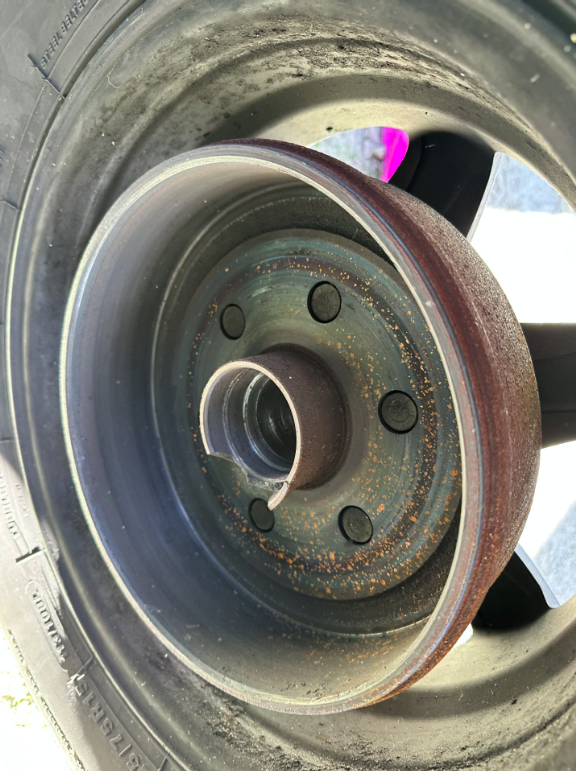
Bearing failure rarely affects only the bearing. This damaged brake drum demonstrates how neglected bearing maintenance can lead to costly damage to surrounding components including hubs, brakes, and axle assemblies.
A Common Misconception
It is easy to assume that if your trailer is moving smoothly, everything is functioning properly. In reality, bearings can wear gradually without obvious symptoms until they reach a failure point.
Waiting for a noticeable problem is not a reliable approach to maintenance. By the time symptoms appear, the damage may already be significant.
The Bottom Line
Wheel bearing maintenance may not be the most visible part of trailer ownership, but it is one of the most important.
It is a relatively simple and low-cost task that plays a major role in keeping your trailer safe, reliable, and ready for the road. Taking the time to inspect and maintain your bearings helps prevent breakdowns, protects your equipment, and reduces risk for everyone around you.
Routine maintenance is also a small investment compared to the cost and inconvenience of bearing failure. Servicing bearings before problems develop can help avoid damage to hubs, brakes, axles, and other surrounding components—repairs that are often significantly more expensive and disruptive than preventative maintenance.
Because when it comes to towing, it is often the small things you cannot see that matter the most.
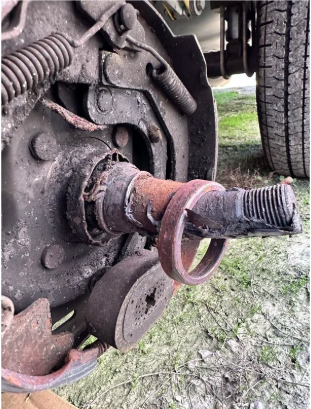
This spindle shows damage caused by bearing failure. Excessive heat, friction, and metal-to-metal contact can permanently damage the spindle surface, often requiring more extensive repairs than bearing replacement alone.
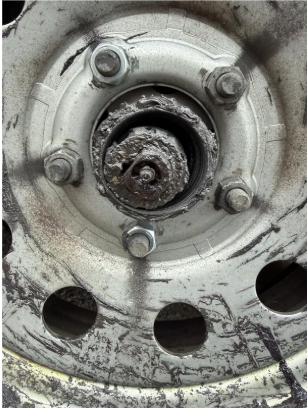
This bearing shows signs of failure caused by excessive heat. Heat buildup from inadequate lubrication, contamination, improper adjustment, or delayed maintenance can damage bearing surfaces and lead to premature failure.